|
|
|
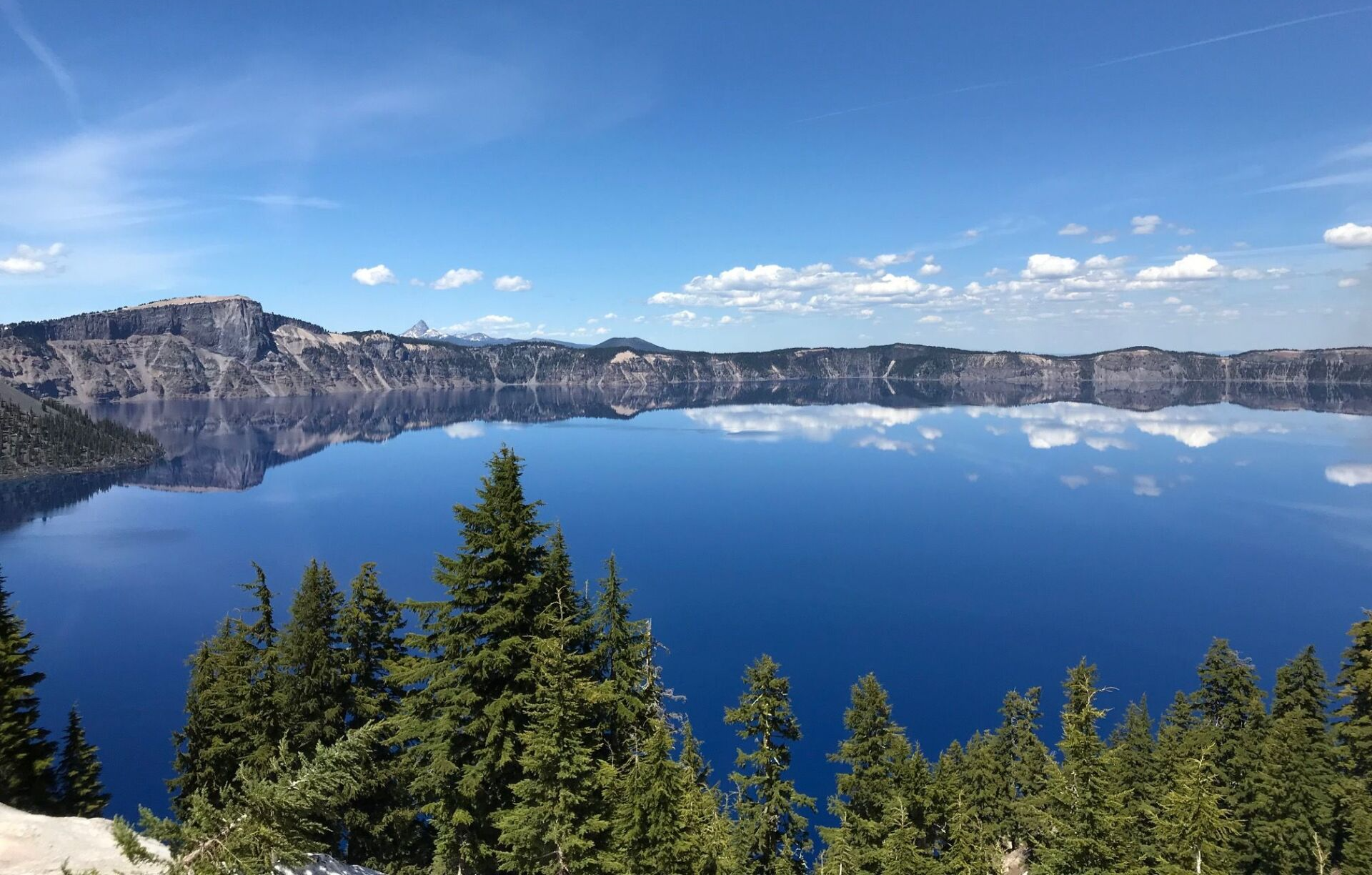
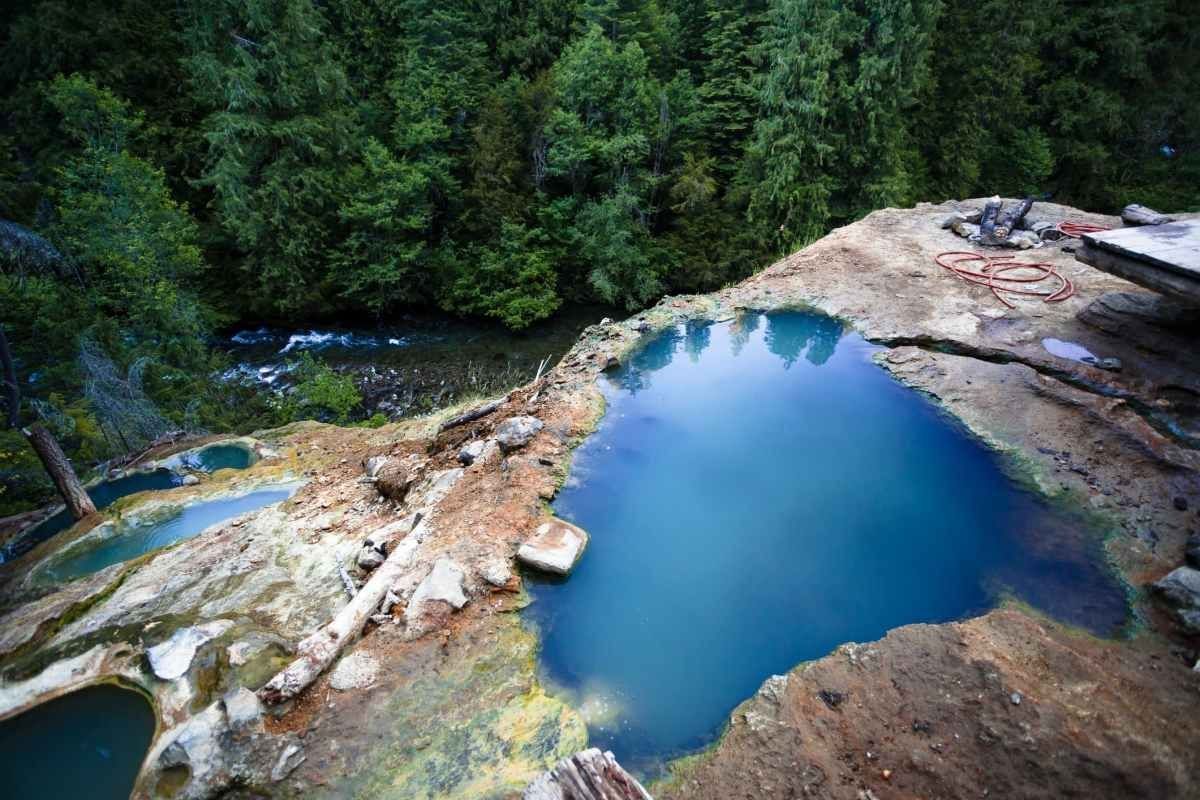
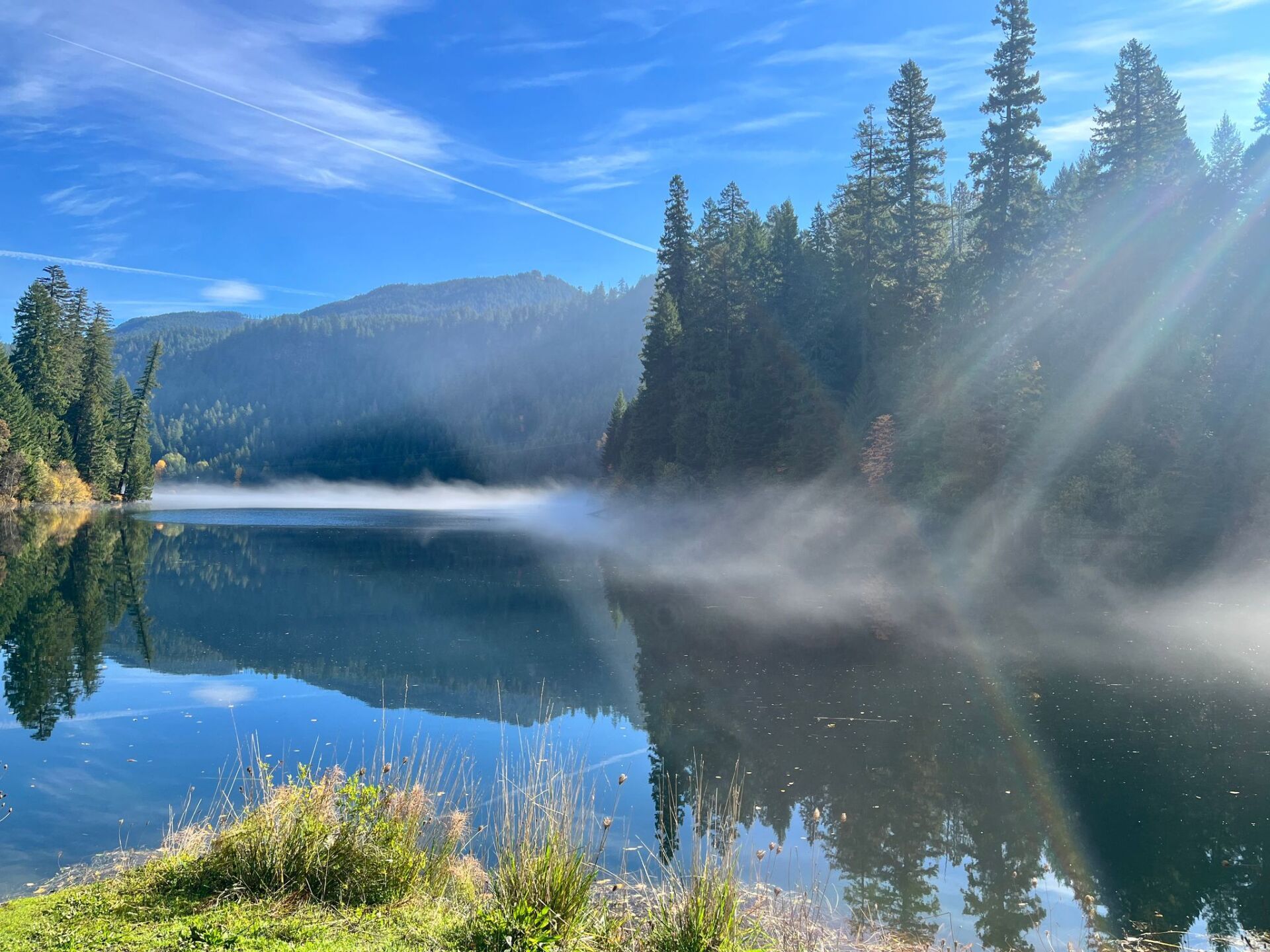
Umpqua's Last Resort is nestled along the North Umpqua River in the Oregon Cascade Mountains. Surrounded by the Umpqua National Forest it has been named "Oregon's Emerald-Jewel Gateway" to Crater Lake National Park that leads along spectacular marble river views.
We offer large RV Sites, Campsites, & Lodging in an area known for its multitude of activities. World class fly-fishing and professionally guided Whitewater Rafting & Mountain Biking Tours are also available.
|
Tranquil Exhilaration
The North Umpqua area, located in the cascade mountain range of Oregon, prior to the arrival of settlers,
was occupied by The Umpqua Tribe of Indians, subsisting
on the abundant fish, game, roots, nuts and berries of
the region. The term “Umpqua,” naming the major river
in the area, is thought to describe the rush of “Thunder
Water” from the many waterfalls and rapids. However,
the true meaning of the word is uncertain. Settlers
established homesteads in the Glide area beginning
around 1852. The name Glide came into existence in
1890 when Virginia Laird selected the name for the new
post office from the song “The River Goes Gliding Along.”
A ranger station was built in Glide in the 1930s by the
Civilian Conservation Corps. Today, the building houses
the Colliding Rivers Visitor Center. Prune orchards and
farming were the main economic basis for the area until
logging became prevalent in the 1940s.
Idleyld Park was named and established as an
amusement park in 1920 by Mr. Inman. Earl Vosburg
bought the property and completed the store and cabins.
It included picnic grounds, overnight camping, and a
dance hall. Mr. Vosburg became the first postmaster when
postal services were moved from the Nixon cabin near
Rock Creek to the Vosburg’s property in 1926. He also
operated a large tamale factory, employing local women
to can tamales that were shipped all over the United States
during the Great Depression.
|
|
RV Park & Campground
|
 |
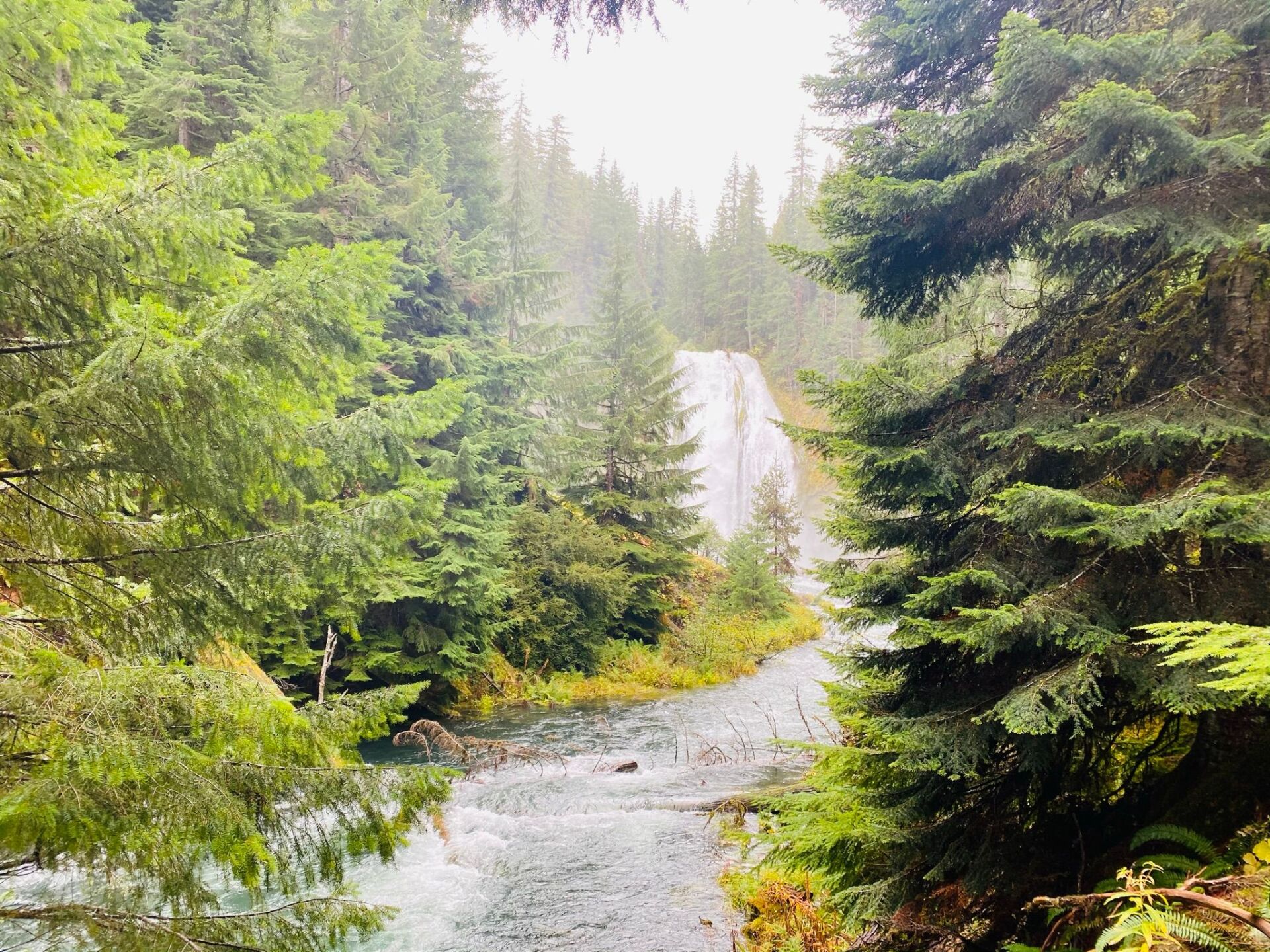
It is another 50 miles to the next gas. Scenic Highway 138 is nick-named Oregon's "Emerald-Jewel" Gateway to Crater Lake. There are a multitude of waterfalls, wildlife, and amazing river views to fill your trip with many exciting things to see.
|
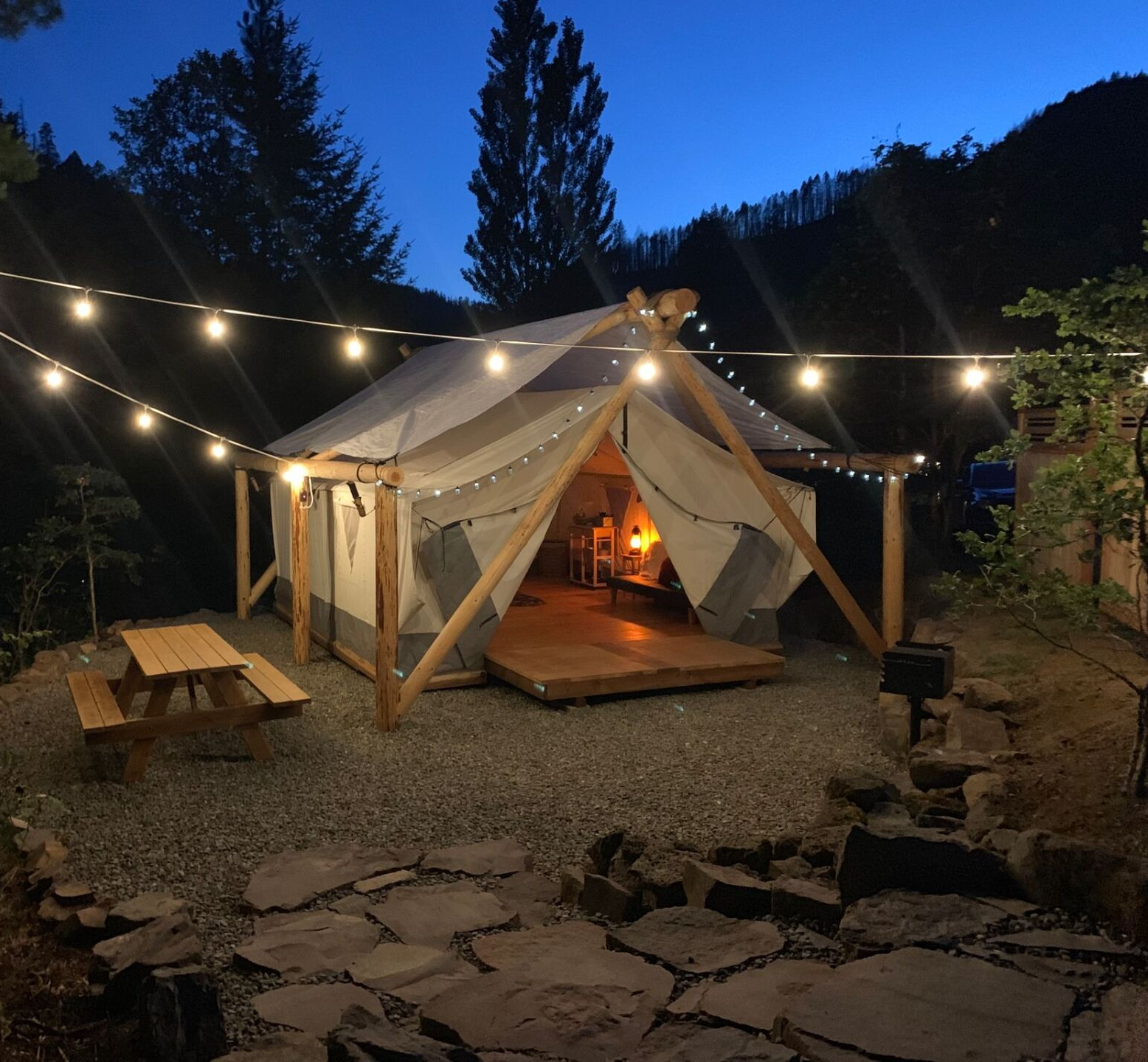
Umpqua's Last Resort includes well-maintained bathrooms, heated showers, wireless internet access (WiFi), and laundry to compliment your 50 or 30 amp RV site, Tent site or Camping Cabin Rental. We are in the process of upgrading our facilities to include deluxe 1 bedroom vacation home sales and rentals.
We offer:
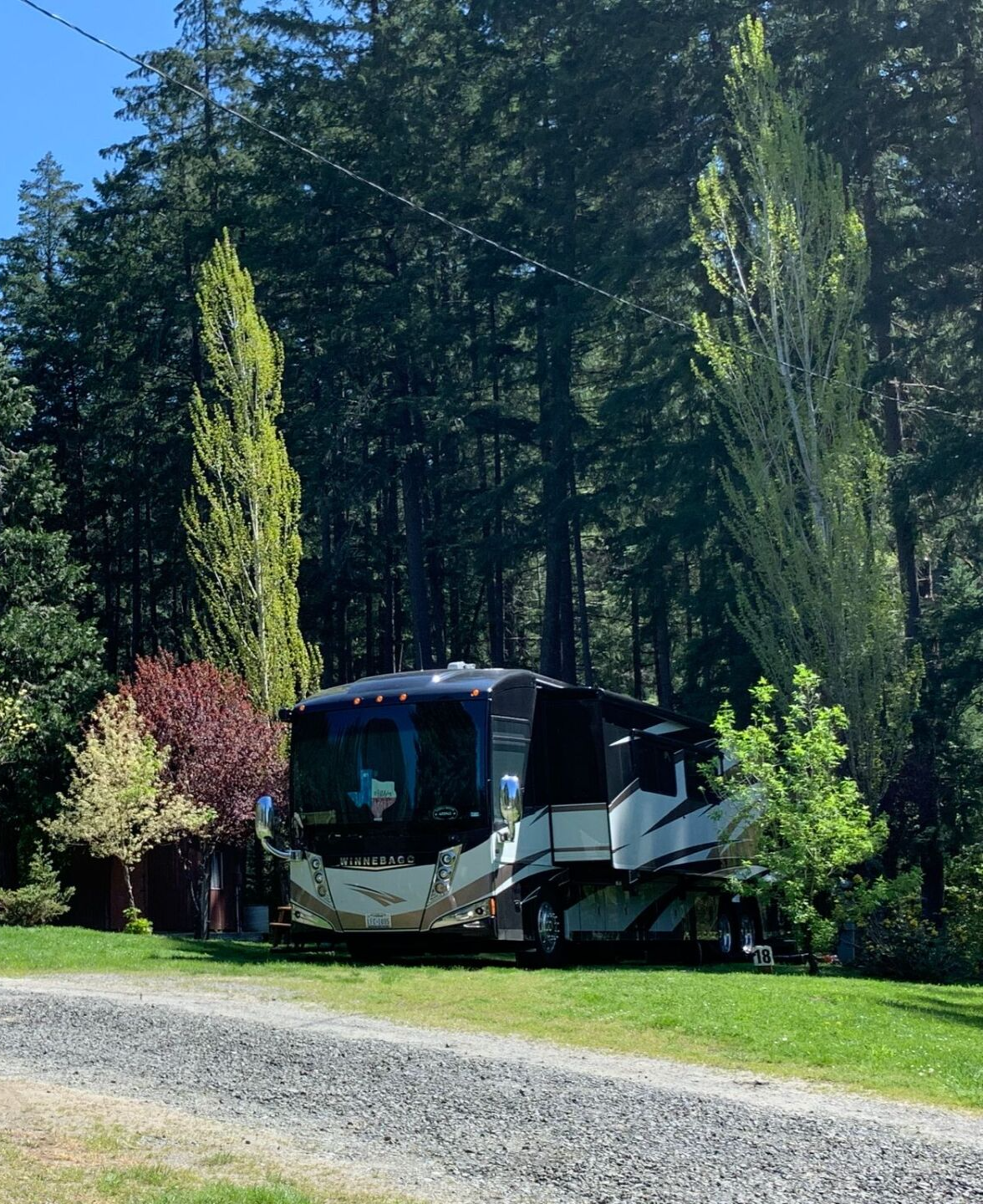
- Full RV Hook up sites
- Tent sites with power & water
- Dry Camping Cabins
- Linens Provided
- Vaulted Tongue & Grove ceilings
- WiFi Wireless internet
- Community Country Store
- Gas/Diesel
- Ice
- Propane
- Food
- Beverages
- Tours
- Whitewater Rafting
- Lava Rock Campfire rings
- Picnic Tables
- Clean Restrooms & Showers
- Sunny Southern Exposure
- Amazing Star Gazing
- Friendly & Personable Service
|
 |
|
The Park is quickly becoming a reality, we are pleased with the progress we have made over the last year. Landscaping is coming along well and the new trees are growing fast. The new 50/30/20A pedestals are sure to please, and the settings have plenty of room for your slides and extra vehicle.
|
Dry Creek
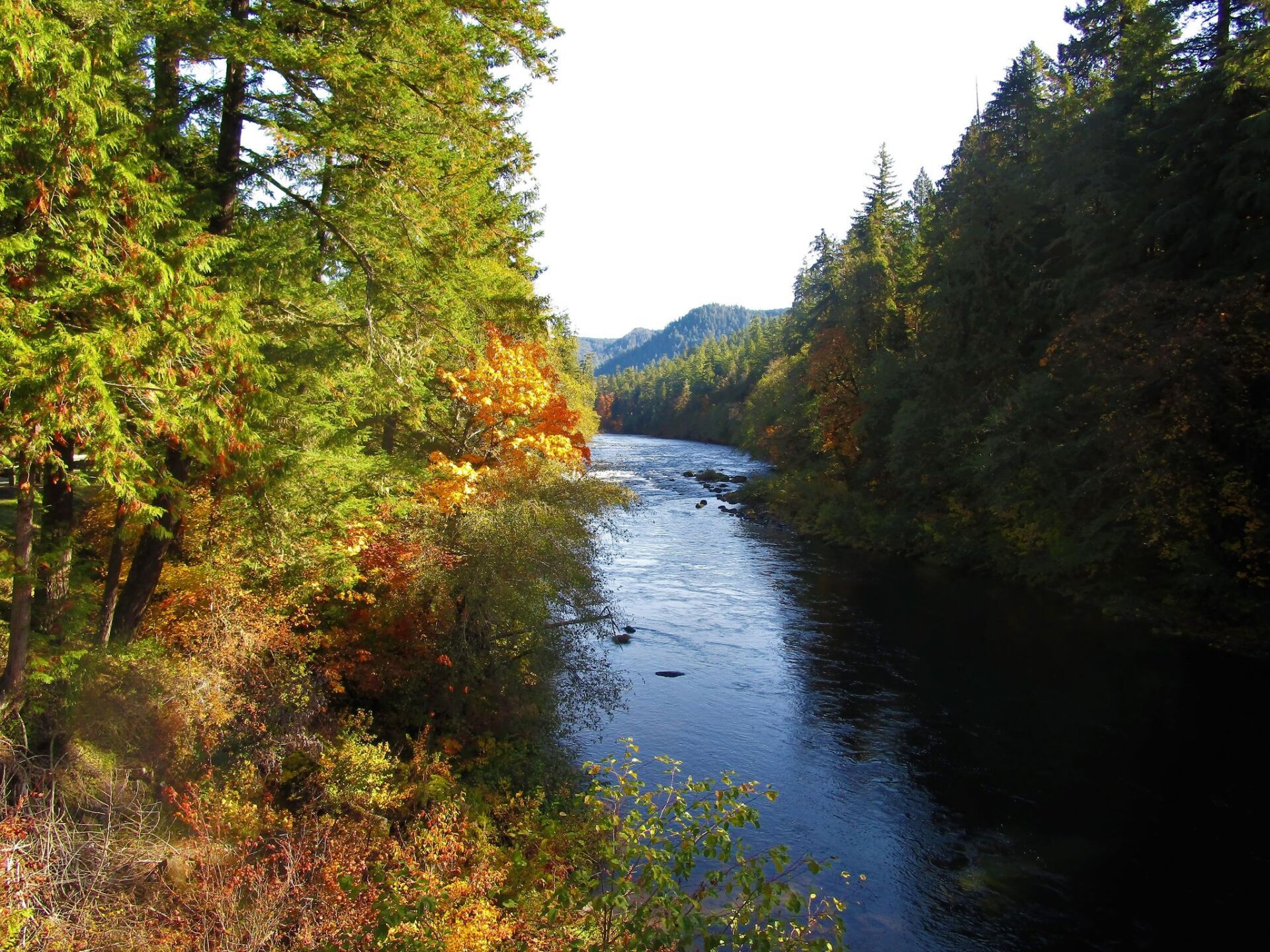
Dry Creek runs along side the park just inside the National Forest boundary. The short trail leading to the pool is an immediate transition from 'park' to 'wilderness'. Dry Creek Flows into the North Umpqua River that is a tributary of the Umpqua River, approximately 100 miles (161 km) long, in southwestern Oregon in the United States. It drains a scenic and rugged area of the Cascade Range southwest of Eugene, flowing through steep canyons and surrounded by large Douglas-fir forests. Renowned for its emerald green waters, it is considered one of the best fly fishing streams in the Northwest for anadromous fish.
It rises in the high Cascades, issuing from Maidu Lake at elevation of 5,980 feet (1,823 m) in the Mount Thielsen Wilderness, along the Douglas-Klamath county line approximately 70 miles (113 km) east of Roseburg. It follows a serpentine course down from the Cascades, westward along the southern side of the Calapooya Mountains. Its upper course passes through the Umpqua National Forest, past Toketee Falls and Steamboat, where it receives Steamboat Creek from the north. It receives the Little River from the south at Glide and joins the South Umpqua from the east approximately 5 miles (8 km) northwest of Roseburg to form the Umpqua.
It is impounded in its upper reaches in the Cascades to form Lemolo Lake for hydroelectricity. It is also impounded for hydroelectricity at Soda Springs Dam, forming a small reservoir on the upper river.
|
North Umpqua River
In its lower reaches, the river's flow becomes increasingly erratic, in a manner typical of mountain streams of the region.
The region around the river has long been a timber-producing area. Starting in 1955, the watershed of the river was extensively clear cut, a practice which continued until 1969 when forestry management practices were changed. During this period many tributary streambeds were used as impromptu logging roads. The recovery of the river from these practices has been closely monitored by state and federal agencies.
In 1988 the United States Congress designated approximately 33 miles (53 km) of the river downstream from the Soda Springs Powerhouse as the North Umpqua Wild and Scenic River as part of the National Wild and Scenic River program.
|
Fly Fishing
The river is a popular destination for fly fishing and is renowned for emerald green waters and its summer steelhead activity, as well as for its salmon runs. Its summer steelhead fishery is considered one of the best on the West Coast. Moreover, the river is known for its high concentration of native steelhead relative to the fishery stock.
The river's reputation as a world-class steelhead stream and its famous emerald waters are a result of the fact the river source is high enough in the Cascades to derive from snowmelt during the entire year. The melting snow is trapped in volcanic soil and pumice and released during the summer months, providing an even cool-temperature flow. During the summer the flow of the river is approximately 20 times that of the nearby South Umpqua, which does not rise from snowmelt.
|
|
White Water Rafting
|
It is also a popular but challenging destination for whitewater rafting. Flowing through a gorgeous, thickly forested, steep-walled canyon, the North Umpqua offers sparkling clear water and numerous challenging rapids.
The North Umpqua sports more rapids per mile than most runs, and the rapids are great fun at any time of year. Spring is the ideal time to raft the North Umpqua if you're looking for white-knuckle thrills, while summer offers warmer weather and a more relaxed pace.
Our one day North Umpqua trips feature the exciting 12 miles from Boulder Flat put-in to Gravel Bin take-out, encountering such drops as Boulder Hole, Cardiac Arrest, Weird Weir, African Queen, and Pinball. (Low water trips may put in at Marsters Bridge for a 10 mile run.)
|
 |
|
Dry Creek Trail
|
 |
Welcome to the Umpqua National Forest! Please take only pictures and leave only footprints. Umpqua National Forest, in southern Oregon's Cascade mountains, covers an area of one-million acres (4,000 km²) in Douglas, Lane, and Jackson Counties, and borders Crater Lake National Park. The four ranger districts that comprise the Forest are Cottage Grove, Diamond Lake, North Umpqua, and Tiller Ranger Districts. The Forest is managed by the United States Forest Service, headquartered in Roseburg.
Stands of hemlock, true fir, Douglas-fir and cedar transition to lower elevation forests of mixed conifers and hardwoods. Timbered valleys of old-growth ponderosa and groves of oak separate mountains like the 9,182-foot (2,799 m) Mount Thielsen and the 8,363-foot (2,549 m) Mount Bailey. Notable geologic features include volcanic basalt and andesite monolithic spires with descriptive names like Eagle Rock, Rattlesnake Rock, and Old Man.
|
|
North Umpqua Trail
|
 |
The North Umpqua Trail is a hiking trail that follows the North Umpqua River in Southern Oregon, United States. The trail is about 79 miles long. It is broken up into 11 sections, ranging from 3.5 to 15.7 miles in length. The trail ranges in elevation from 800 feet to about 6000 feet.
The North Umpqua Trail follows the North Umpqua River as it winds west out of the Cascades and towards the city of Roseburg, Oregon. The trail is inside the Umpqua National Forest and closely follows the river for most of its length. Since it is in a national forest, the trail almost completely avoids all human structures, except at one of the trail heads.
|
|
Ancestors of the Umpqua, Southern Molalla, Yoncalla, and Cow Creek Band of Umpqua Tribe of Indians lived here before Mount Mazama erupted forming Crater Lake nearly 7,000 years ago. The Indians were moved to reservations in 1856 and, ss Europeans bought reservation lands, the tribes further fragmented to become farmers and ranchers in the Umpqua Valley. Two translations of the word "umpqua" are "thundering waters" and "across the waters".[2]
The Umpqua National Forest was created by Congress on July 1, 1908. The Forest Service staff soon began building trails, constructing bridges, fighting fires, monitoring grazing, and erecting lookouts. Logging and mining began in 1925. The Civilian Conservation Corps was active in the Umpqua National Forest by building roads, bridges and recreation facilities in the 1930s.
Points of interest
Umpqua National Forest is home to over 250 wildlife species. Large mammals such as elk, deer, black bear, and cougar, as well as the smaller residents, squirrels, fox, raccoons, and bats are supported by the diverse forest habitats. Raptors such as owls, eagles, osprey, and even peregrine falcons can occasionally be seen in the forest. Coho and Chinook salmon and steelhead, rainbow, brown and cutthroat trout swim, feed and spawn in the rivers and streams of the Forest.[3]
Recreational activities in the Forest include camping, fishing, hiking, horseback riding, mountain biking, rock climbing, and boating. Winter activities include both nordic and downhill skiing, as well as snowshoeing and snowmobiling.
In 1988, the Oregon Omnibus Wild and Scenic Rivers Act designated a portion of the North Umpqua River a part of the Wild and Scenic River system. Twenty-six miles of the river run through the Forest.
The Rogue-Umpqua National Scenic Byway extends 172 miles (277 km) through the Rogue River and Umpqua National Forests, as well as the Medford and Roseburg districts of the Bureau of Land Management and private lands.
Wilderness areas The Umpqua National Forest contains three Wilderness Areas: Boulder Creek, Rogue-Umpqua Divide, and Mount Thielsen.
Boulder Creek
Boulder Creek is a 19,100-acre (77 km2) Wilderness area located 50 miles (80 km) east of Roseburg. One popular area in Boulder Creek is Pine Bench. A flat area overlooking Boulder Creek, Pine Bench is home to a grove of majestic old growth Ponderosa pines. In 1996 the Spring Fire burned 16,500 acres (67 km2) in the Boulder Creek Wilderness.[4]
Rogue-Umpqua Divide
The Rogue-Umpqua Divide is a 33,000-acre (130 km2) Wilderness area, 26,350 acres (106.6 km2) of which is inside the National Forest. Located 80 miles (130 km) east of Roseburg, the Rogue-Umpqua Divide ranges in elevation from 3,200 to 6,878 feet (2,096 m) and separates the drainages of the Rogue and Umpqua rivers. The Wilderness includes sub-alpine meadows and old-growth forests.[5]
Mount Thielsen
Mount Thielsen is a 55,100-acre (223 km2) Wilderness area, 21,593 acres (87.38 km2) of which is located inside the National Forest. Located 80 miles (130 km) east of Roseburg, this Wilderness area is the largest in the Umpqua. The 9,182-foot (2,799 m) Mt. Thielsen was born of the same volcanic activity that created Crater Lake and some trails pass over deep pumice that was deposited when Mt. Mazama erupted. The Pacific Crest Trail passes through the middle of the Wilderness area.[6]
|
 |
|
|
|
|